Ajna Chakra Explained: Meaning, Location and Benefits of Meditating on the Third Eye Chakra


Between the eyebrows, at the exact centre of the head, sits the chakra that the yogic tradition regards as the most significant of all nine: Ajna, the third eye. This chakra also carries the name Aajnai, the ordering chakra, the one place in the body from which a realised being can direct events by will alone. Yet paradoxically, it is also the chakra where most yogis stop climbing altogether, so captivated by the bliss that opens here that they never move beyond it. This guide covers all of it: where Ajna sits, how it is initiated, what unfolds through sincere sadhana there, and why sustained guidance matters more here than almost anywhere else on the path.
What Is the Ajna Chakra?
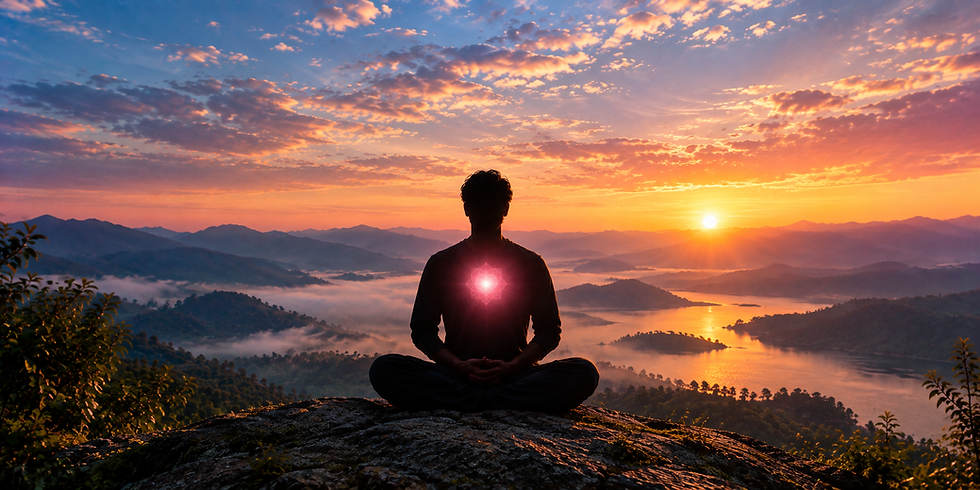
Ajna is the sixth of the nine chakras, seated between the eyebrows at the exact centre of the forehead. Most people know it as the third eye chakra. It carries several older names as well: Netrikann in Tamil, since it refers to the third eye on Lord Shiva's own forehead, and Thirumukoodal or Triveni Sangamam, because the three main nadis governing the body's prana, Ida, Pingala and Sushumna, converge here. In yogic tradition, this chakra is considered the single most significant of the nine, the base chakra for every yogi. It is also the seat from which a realised being can order things to happen by will alone, carrying the Tamil name Aajnai, meaning "the ordering chakra."
What Is Kundalini and What Are Chakras?
Every seeker arrives at the same two questions eventually: what is this energy, and what are chakras? Kundalini is not something rare or reserved for the exceptional. It exists in every human being, though most people draw on only a small part of it, the rest spent on restless thinking and worry, which is why ordinary life can feel tiring for no clear reason. This energy lies dormant at the base of the spine until it is stirred.
Chakras are the points this energy passes through once it rises. They are the doors to the true self, to moksha, to enlightenment. Each of the nine carries its own character and its own gift for the seeker who meditates there, and together they are the only doors of inner travel available to a seeker.
Where Is the Ajna Chakra Located?
Ajna sits between the eyebrows, at the exact centre of the forehead, level with the tip of the nose. From the exact midpoint of the head, if a seeker draws a line in all four directions, Ajna faces the front, Sahasrara rises directly above at the crown, Pidari Kan rests behind at the back of the head, and Manonmaniyam settles below, near the inner tongue. Of these four, Ajna covers the frontal lobe, making it the most powerful point among them, and the chakra where all of a seeker's divine visions first begin to open.
How Is the Ajna Chakra Initiated?
No one initiates Ajna through effort alone. Kundalini Shakti stays dormant in every human being until a realised master, or a disciple trained and entrusted by him, stirs it through touch or sight. This first initiation carries the dormant energy up the spine and settles it, most often, at this very eyebrow centre, opening the channel joining the root chakras to every chakra above them. Because of this, Ajna already holds a special place in a seeker's very first initiation, long before any deliberate sadhana is directed at it. Only once a seeker chooses to meditate here directly does its own distinct practice begin. The climb from one chakra to the next is traditionally described as close to a year of sustained practice. Grace does not follow that clock. A seeker can be initiated directly into Ajna by a realised Guru or a disciple trained and entrusted by him, without waiting through the traditional sequence.
Which Deities Govern the Ajna Chakra?
Every chakra carries its own set of divine forces, and Ajna is no exception. The Athidevatha is the presiding deity, holding the core spiritual power of this centre, and Lord Shiva presides directly at this chakra, the same third eye referenced in the old Tamil name Netrikann. The Prathidevatha supports that power and helps carry its transformation forward, and a third, smaller force, the Upadevatha, attends alongside both. Together, these three shape a change a seeker usually feels long before it can be put into words.
What Are the Benefits That Unfold Through Sadhana in the Ajna Chakra?
Sincere sadhana at Ajna does not bring one single change. It brings several, and they settle into a seeker's life together rather than arriving one at a time.
As Kundalini energy is enkindled in a seeker and the Ajna chakra is initiated through a Guru's grace, the two eyes, representing opposing viewpoints in any situation, are brought into a third, unifying view where everything remains balanced. In Tamil literature, a man's three major desires are named as desire for property, desire for sensual pleasure and desire for wealth, and sadhana at Ajna burns through these along with the mind's deeper impurities: arrogance, karma and illusion. Ajna is the only chakra with the power to burn through these three impurities completely, purifying the mind at its root and easing a seeker's passage towards liberation.
Alongside this inner purification, a visible change unfolds. The mind becomes calm and subdued, intuition sharpens, and a seeker's face grows bright, radiant and charismatic, often drawing genuine admiration the seeker never sought. The eyes carry a shine of their own, sensitivity to fragrance increases, and the body tires far less easily than before. Ajna also works as the body's own thermostat, helping regulate temperature as sadhana here deepens.
Subtler capacities open too: holy visions, an instinct for what is about to unfold, and even the ability to sense another person's thoughts. None of this is ever the reason a seeker meditates here, and none of it can be pursued directly. Whatever opens through sadhana at Ajna arrives only as a byproduct of sincere practice under grace, and any deepening of it remains entirely the Guru's decision.
This chakra also carries its own caution. The bliss that opens at Ajna is so complete that most yogis who reach this point never move beyond it, settling here for the whole of their sadhana life without crossing further. Guided sadhana under a realised Guru is what carries a seeker safely past this final barrier, towards Sahasrara and the Self-realisation that lies beyond it.
How Does the Ajna Chakra Serve a Seeker's Path to Self-Realisation?
Ajna sits at the exact point where a seeker's inner clarity becomes outer command. It is the chakra a seeker's very first initiation already touches, long before any deliberate sadhana begins there, and the chakra where the mind's oldest impurities, ego, karma and illusion, finally burn away under sustained practice. What makes Ajna unlike the chakras before it is the scale of what opens here: divine visions, a purified mind and a magnetism entirely its own. Yet its real place on the path is not as a destination but as a threshold. A seeker who crosses beyond the bliss of Ajna, under a Guru's continued guidance, moves on towards Sahasrara, the crown, and Self-realisation itself.
Key Takeaway
Ajna sits between the eyebrows, at the exact centre of the forehead, and only a Guru's grace can initiate it, never self-practice or a fixed timeline. Sincere sadhana here works on more than one level at once: it burns through a seeker's oldest desires and impurities, brings a calm and radiant transformation to the mind and face, and opens subtler capacities that are never the goal and never something to chase. Considered the most significant chakra in yogic tradition, Ajna is also where most yogis stop climbing altogether, making guided sadhana under a realised Guru essential to carrying a seeker beyond it. None of these arrives as separate rewards. They unfold together, carrying a seeker further along the path toward Self-realisation.
For guidance on where to begin, seekers are welcome to reach out to understand the right starting point.
FAQs
What does Ajna mean? Ajna is the sixth of the nine primary chakras in the Kundalini system, also known as the third eye chakra. It sits between the eyebrows, at the exact centre of the forehead.
Where exactly is the Ajna chakra located? Between the eyebrows, at the exact centre of the forehead, level with the tip of the nose. It is widely known as the third eye chakra or the brow centre.
Can the Ajna chakra be initiated through self-practice alone, without a Guru? No. Kundalini Shakti is stirred only by the touch or sight of a realised master, or of a disciple trained and entrusted by him, opening the channel connecting all nine chakras. Self-guided technique or willpower cannot initiate Ajna or any other chakra.
Does it really take a year to reach the Ajna chakra? Traditionally, the climb from one chakra to the next is described as close to a year of sustained practice. Grace, however, is not bound to that timeline. A seeker can be initiated directly into Ajna by a realised Guru or a disciple trained and entrusted by him, without waiting through the traditional sequence.
Why does Ajna already play a role in a seeker's very first initiation? Because the first initiation a seeker ever receives raises the dormant Kundalini energy up the spine and settles it, most often, at the eyebrow centre, Ajna's own location, opening the channel to every chakra above and below it. Deliberate sadhana at Ajna itself begins only afterwards, once a seeker chooses to meditate here directly.
Why is Ajna considered the most significant chakra in yogic tradition? Because it covers the frontal lobe, the most powerful of the four points radiating from the centre of the head. It is also the seat from which a realised being can order things to happen by will alone, carrying the Tamil name Aajnai, meaning "the ordering chakra."
What desires does sadhana at the Ajna chakra burn away? Tamil literature names three major desires that bind a person: desire for property, desire for sensual pleasure and desire for wealth. Sustained sadhana at Ajna burns through these, along with the mind's deeper impurities of arrogance, karma and illusion.
Does meditating in the Ajna chakra bring psychic abilities like foretelling or reading minds? Subtler capacities such as holy visions, an instinct for what is about to unfold and an ability to sense another person's thoughts open with sustained sadhana here. None of this is ever the goal, and none of it can be pursued directly. Whatever opens arrives only as a byproduct of sincere practice under grace, gated entirely by the Guru's discretion.
Why do so many yogis never move beyond the Ajna chakra? The bliss that opens at Ajna is so complete that most yogis who reach it settle here for the whole of their sadhana life without crossing further. Guided sadhana under a realised Guru is what carries a seeker safely past this barrier, towards Sahasrara and Self-realisation.
What are the Athidevatha and Prathidevatha, and how do they relate to the Ajna chakra? Every chakra, including Ajna, carries a presiding deity called the Athidevatha and a supporting deity called the Prathidevatha, along with a lesser attendant, the Upadevatha. At Ajna, the Athidevatha is Lord Shiva, the same third eye referenced in the old Tamil name Netrikann.
What is the difference between Kundalini and a chakra? Kundalini is the dormant life energy itself, residing at the base of the spine in every human being. Chakras are the nine energy points, Ajna among them, through which this energy travels once it has been stirred.
What is the difference between Vishuddhi chakra and Ajna chakra? Vishuddhi sits at the pit of the throat and touches the power and purity of a seeker's own words. Ajna rises higher still, between the eyebrows, and touches the mind's deepest impurities and the visions that open once they burn away, the sixth step on the same ascent towards Self-realisation.
Does the Ajna chakra affect the physical body as well? Yes. Alongside its inner and subtler effects, sustained sadhana at Ajna brings a calm mind, a radiant face, brighter eyes and greater physical endurance, and it also works as the body's own thermostat, helping regulate temperature.


Comments