Anahata Chakra Explained: Meaning, Location and Benefits of Meditating on the Heart Chakra

At the centre of the chest, level with the physical heart, rises the fourth chakra on every seeker's ascent: Anahata, the heart chakra. Most people spend a lifetime mistaking lust for love and never come close to the real thing. Sadhana at Anahata reaches past a single feeling: it touches fear, anger and the body's own weight, and it opens directly onto the doorway of moksha itself. This guide covers all of it: where Anahata sits, how it is initiated, what unfolds through sincere sadhana there, and why it cannot be skipped on the way to Self-realisation.
What Is the Anahata Chakra?
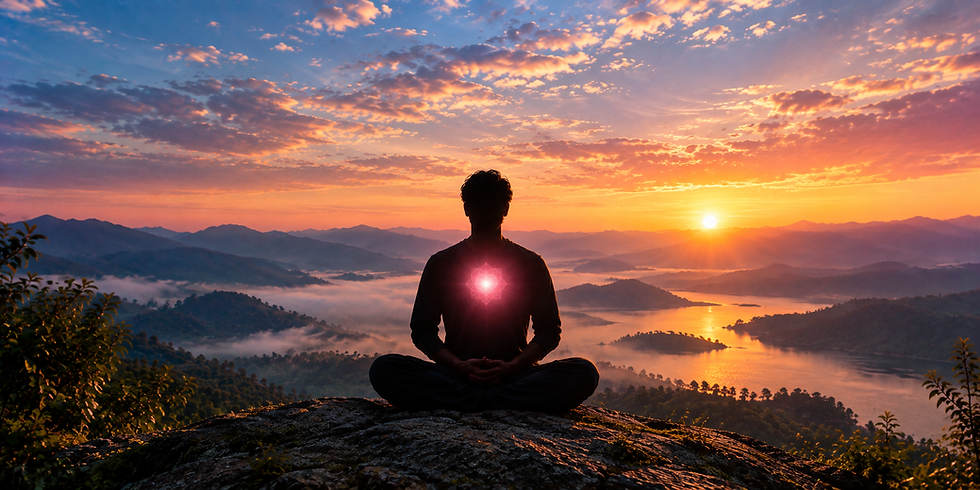
Anahata is the fourth of the nine chakras, rising directly above Manipura at the centre of the chest. Most people know it simply as the heart chakra. It is the most physical of the nine, since no other chakra sits this close to a major organ, yet its own nature is the spiritual heart, never the anatomical one. Its work reaches far beyond a single feeling: it dissolves hatred and fear into love and compassion, it deepens surrender on the path of Bhakti yoga, and, in time, it opens sensitivity to the burdens carried in other people's hearts.
Also Read: Swadishthana Chakra Explained: Meaning, Location and Benefits of Meditating on the Sacral Chakra
What Is Kundalini and What Are Chakras?
Every seeker arrives at the same two questions eventually: what is this energy, and what are chakras? Kundalini is not something rare or reserved for the exceptional. It exists in every human being, though most people draw on only a small part of it; the rest is spent on restless thinking and worry, which is why ordinary life can feel tiring for no clear reason. This energy lies dormant at the base of the spine until it is stirred.
Chakras are the points this energy passes through once it rises. They are the doors to the true self, to moksha, to enlightenment. Each of the nine carries its own character and its own gift for the seeker who meditates there, and together they are described as the only doors of inner travel available to a seeker.
Where Is the Anahata Chakra Located?
Anahata sits at the centre of the chest, level with the physical heart, directly above Manipura. It is widely known by its common name, the heart chakra. Of all nine chakras, it sits closest to a major organ of the body, which makes it the most physical chakra of the nine, even though what it governs is entirely the spiritual heart rather than the muscle that beats beneath it.
How Is the Anahata Chakra Initiated?
No one initiates Anahata through effort alone. Kundalini Shakti stays dormant until a realised master, or a disciple trained and entrusted by him, stirs it through touch or sight. This first initiation carries the dormant energy up the spine, usually to the eyebrow centre or Ajna chakra, opening the channel joining the root chakras to every chakra above them. Only then can a seeker's own meditation begin to settle energy in a chakra such as Anahata. The climb from one chakra to the next traditionally takes close to a year of practice. Grace does not follow that clock. A seeker can be initiated directly into Anahata without moving through the traditional sequence at all.
Which Deities Govern the Anahata Chakra?
Every chakra carries its own set of divine forces, and Anahata is no exception. The Athidevatha is the presiding deity, holding the core spiritual power of this centre. The Prathidevatha supports that power and helps carry its transformation forward. A third, smaller force, the Upadevatha, attends alongside both. Together, these three shape a change a seeker usually feels long before it can be put into words.
What Are the Benefits That Unfold Through Sadhana in the Anahata Chakra?
Sincere sadhana at Anahata does not bring one single change. It brings many, and they arrive together rather than one at a time.
As Kundalini energy is enkindled in a seeker and the Anahata chakra is initiated through a Guru's grace, the most immediate shift is an overflow of love, the real kind, rather than the lust so often mistaken for it. Impurities that once clouded a person's nature begin to transform into purity, and hatred simply stops finding anywhere to live. A seeker settled here can no longer hold an enemy in mind, since compassion for every being rises in its place, and old anger does not vanish so much as convert into the same love energy that now fills the system.
This transformation reaches into the body as well. A seeker often feels lighter, close to weightless, and finds a freedom to laugh that was not there before. Fears that have sat in the system for years begin to lift, and in their place comes the capacity to surrender completely at the feet of God or Guru, which is why this centre serves seekers walking the path of Bhakti yoga especially well. Sustained sadhana here, combined with sadhana in Ajna, eases depression, lightening a weight that many seekers carry without ever naming it.
Sadhana at Anahata opens a seeker outward as much as inward. A settled heart can sense the burden sitting in someone else's, and the same sadhana that clears a seeker's own emotional weight can be turned, through sincere prayer, towards easing another person's suffering and recovery. None of this arrives as a reward to chase. It unfolds only as a byproduct of sincere sadhana under grace, and any deepening of it remains entirely the Guru's decision, never something a seeker can hurry along.
How Does the Anahata Chakra Serve a Seeker's Path to Self-Realisation?
Anahata sits at the very middle of the body, the door that opens directly onto the world of moksha. Old anger never released, fear that quietly shapes every decision, and the readiness to see an enemy where there was never one, all settle at this same centre. Working with Anahata does not mean suppressing any of that burden. It means allowing it to be met, under a Guru's guidance, until it is finally transformed rather than carried forward.
What follows moves outward as much as inward: a seeker grows graceful in how they carry themselves, generous with the love they once withheld, and able to ease the pain of others as easily as their own. Skipping this chakra does not make that weight disappear. It waits here, on the same climb that carries a seeker, one chakra at a time, toward Sahasrara and the Self-realisation found there.
Key Takeaway
Anahata sits at the centre of the chest, just above Manipura, and only a Guru's grace can initiate it, never self-practice or a fixed timeline. Sincere sadhana here works on more than one level at once: it dissolves hatred and fear into love and compassion, lightens the body, deepens surrender on the path of Bhakti yoga, and, in time, opens the capacity to sense and ease the burdens carried in other people's hearts. None of these arrives as separate rewards. They unfold together, carrying a seeker further along the path toward Self-realisation.
For guidance on where to begin, seekers are welcome to reach out to understand the right starting point.
FAQs
What does Anahata mean? Anahata is the fourth of the nine primary chakras in the Kundalini system, also known as the heart chakra. It rises directly above Manipura, at the centre of the chest.
Where exactly is the Anahata chakra located? At the centre of the chest, level with the physical heart, directly above the Manipura chakra. It is widely known as the heart chakra.
Can the Anahata chakra be initiated through self-practice alone, without a Guru? No. Kundalini Shakti is stirred only by the touch or sight of a realised master, or of a disciple trained and entrusted by him, opening the channel connecting all nine chakras. Self-guided technique or willpower cannot initiate Anahata or any other chakra.
Does it really take a year to reach the Anahata chakra? Traditionally, the climb from one chakra to the next is described as close to a year of sustained practice. Grace, however, is not bound to that timeline. A seeker can be initiated directly into Anahata by a realised Guru or a disciple trained and entrusted by him, without waiting through the traditional sequence.
Is the Anahata chakra only about romantic love? No. It is often mistaken for lust or romance, but its real work is deeper: it dissolves hatred and fear into love and compassion, deepens surrender on the path of Bhakti yoga, and opens sensitivity to the burdens carried in other people's hearts.
Does meditating in the Anahata chakra help with fear and anger? Yes. Sadhana here is known to erase negative fears that have sat in the system for years and to convert old anger into the same love energy that comes to fill the seeker.
Can sadhana in the Anahata chakra help with depression? Sustained sadhana at Anahata, combined with sadhana in the Ajna chakra, eases depression. This unfolds as part of the wider transformation this chakra brings, not as a technique practised in isolation.
Does the Anahata chakra help a seeker sense other people's emotions? Yes. As sadhana deepens here, a seeker can come to sense the burden sitting in another person's heart, and the same sadhana can be turned, through sincere prayer, towards easing that person's suffering and recovery.
Why is the Anahata chakra called the most physical of the nine chakras? It sits closer to a major bodily organ, the physical heart, than any other chakra. Even so, its own nature is the spiritual heart, distinct from the anatomical organ beneath it.
Is the Anahata chakra masculine or feminine? Anahata is a feminine chakra, in keeping with the receptive, compassionate quality of the transformation it brings.
What changes in a person as the Anahata chakra is initiated through grace? As Kundalini energy is enkindled and this chakra is initiated, love, fearlessness, lightness of body and sensitivity to others' emotional burdens shift together rather than one at a time, gradually reshaping the seeker into someone freer and more compassionate.
What are the Athidevatha and Prathidevatha, and how do they relate to the Anahata chakra? Every chakra, including Anahata, carries a presiding deity called the Athidevatha and a supporting deity called the Prathidevatha, along with a lesser attendant, the Upadevatha. Together, these divine forces shape the transformation that quietly takes root as a seeker's energy comes to settle in this chakra.
What is the difference between Kundalini and a chakra? Kundalini is the dormant life energy itself, residing at the base of the spine in every human being. Chakras are the nine energy points, Anahata among them, through which this energy travels once it has been stirred.
What is the difference between Manipura chakra and Anahata chakra? Manipura sits at the navel and touches the emotional burdens of daily life, digestion and subtler capacities such as conscious astral travel. Anahata rises just above it, at the centre of the chest, and touches love, fear, anger and the burdens carried in other people's hearts, the fourth step on the same ascent towards Self-realisation.


Comments